
January 28 2026 at 12:00AM
From Carbon Chaos to Cohesive Market: the Road to CO2 Removal
The future of CO2 removal requires delivery, logistics, and stakeholder engagement solutions — the kind of problems project managers can solve.
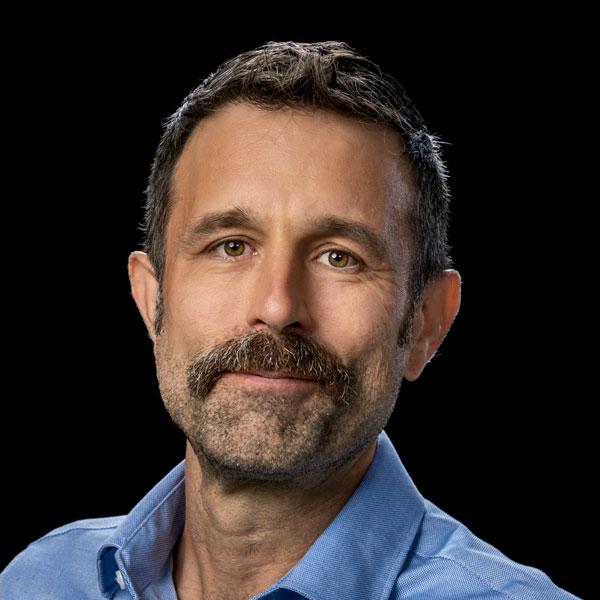
On November 11, 2025, the Sustainability team discussed the science of carbon capture with Caspar Donnison, PhD (Postdoctoral Researcher, Lawrence Livermore National Laboratory). Caspar guided us through the U.S. carbon removal landscape and Roads to Removal Report, showing us how communities and systems must come together to deploy solutions at scale.
Agrivoltaics, geologic storage, and enhanced rock weathering are exciting technologies, but our discussion highlighted a less glamorous reality: decarbonization is more often a logistics and supply chain problem. The U.S. carbon economy is still a patchwork of disconnected actors rather than an integrated marketplace, and that fragmentation slows progress no matter how fast the science moves. For example, the U.S. has the space and technical capacity to pull massive amounts of CO2 from the atmosphere and process it for long-term storage, but we simply don’t have a scalable or profitable way to get that material to those storage sites.
The Road to Removal Demands Classic Project Execution
We’ll need both execution and innovation to get to net zero. That means helping decision-makers define success metrics, weigh long-horizon risks and tradeoffs, engage communities early, and coordinate cross-industry dependencies.
Delivery determines impact, and that’s exactly where talented project managers turn ambition into outcomes.
About the Report
Unlike many top-down climate models, Roads to Removal is built from the bottom-up to support informed decision-making. It evaluates the full supply chain at the local level to answer the question of "what could work here, and what would it take." Some key features of the report include:
- High-resolution, bottom-up analysis using the best available data
- County-level estimates for costs, resource needs, and impacts
- Community context and tradeoffs, so regions can weigh opportunities and constraints based on local priorities
- Transparency, with supporting methods and underlying data made available through the project's website
Resources from the Event
- Roads to Removal website
- Roads to Removal on the Big Ideas Lab podcast (Apple / Spotify)
Related Chapter Events
This discussion is interwoven with many themes the Sustainability Team has explored. Follow the links to other session recordings and earn PDUs!
- Data Center Sustainability
- Caspar discussed connections to AI and the potential to use the massive demand for data centers to de-risk and scale-up climate mitigation technologies through using waste heat to capture carbon, trialing sustainable materials, and new cooling methods.
- Offshore Documentary: Just Transitions from oil economies
- The Roads to Removal Report leverages the Social Vulnerability Index to provide a starting point to engage with communities on a proactive, realistic, and just economic level.
- Green Project Manager Certification
- Logistics, supply chains, and how project management is the connective tissue in sustainable economies
- International careers + sustainable development in the Congo
- Boots-on-the-ground discussion of engaging small communities on their own terms.
UN Sustainable Development Goal Impact
This session connects directly to PMI's sustainability focus and contributes to multiple United Nations Sustainable Development Goals (SDGs), including:
- SDG 7: Affordable and Clean Energy
- SDG 9: Industry, Innovation and Infrastructure
- SDG 11: Sustainable Cities and Communities
- SDG 12: Responsible Consumption and Production
- SDG 13: Climate Action
About Caspar

Caspar Donnison is an interdisciplinary scientist, whose research covers the fields of environmental economics, environmental science, sociology, and policy.
His primary area of research is in assessing the potential for decarbonization using biomass resources. He has led publications exploring the sustainability, social acceptability, and policy of the carbon dioxide removal technology bioenergy with carbon capture and storage (BECCS). He has also worked closely with industry and policymakers on supply chain feasibility of BECCS, as a researcher with the £20 million Industrial Decarbonisation and Research Innovation Centre (IDRIC) in the UK.
More recent research has involved understanding public engagement with novel climate technologies, having collaborated with sociologists and consulted for Supergen Bioenergy Hub on public engagement. He is currently researching public attitudes towards the dual-use of land for solar energy and agriculture (‘agrivoltaics’) in the US.
He has a strong interest in communicating climate science and decarbonization, and has engaged with policymakers and politicians, such as through the Californian Assembly select committee system, the Western Governors' Association, and LLNL’s ‘Roads to Removal’ symposiums. He has also contributed to policy reports and submitted scientific evidence to UK Parliamentary inquiries, including most recently the House of Lords 2024 methane inquiry, where he submitted his published climate science research on the impact of the livestock sector.